

Within behavioral healthcare, correctional, and other high risk environments, the phrase "anti-ligature" is commonly used to describe safety focused fixtures designed to prevent patients from using hardware as a point of self harm.
While the term is widely understood across the industry, it is technically a misnomer. No single product can make an environment completely ligature free. The more accurate term is "ligature resistant," which describes products designed without points where a cord, rope, bedsheet, or other material can be looped or tied to create a sustainable attachment point.
That distinction matters, but it does not change the reality on the ground. Behavioral safety products are essential to creating environments that reduce the risk of suicide and self harm in mental health facilities, psychiatric units, and secure care settings.
The challenge for facility managers, architects, engineers, and safety officers is understanding the full scope of behavioral safety products available, where each category fits within a broader safety strategy, and how to specify products that meet the specific needs of each project.

Table of Contents
What Are Behavioral Safety Products?
Behavioral safety products is a broad term used to describe safety focused fixtures, fittings, and hardware designed specifically for use in behavioral healthcare environments. These products are engineered to advance safety by eliminating or reducing ligature points, resisting tampering and abuse, and maintaining the durability and functionality required in demanding clinical settings.
The category covers a wide range of products, from door fittings and bathroom fixtures to furniture, lighting, and restraint systems. What separates behavioral safety products from standard commercial fittings is their design intent. Every element, from the profile of a handle to the mounting method of a soap dispenser, is considered through the lens of patient safety and ligature risk reduction.
The industry has been continuously developing new solutions in this space. As accreditation bodies such as The Joint Commission and CMS have increased scrutiny on ligature risks in recent years, manufacturers and engineers have responded with behavioral safety products that are more refined, more rigorously tested, and better designed to balance safety with aesthetics and clinical functionality.
Categories of Behavioral Safety Products
Behavioral safety products span nearly every fixture and fitting found in a mental health facility. Understanding the main categories helps architects, engineers, and facility teams identify where ligature resistant products are needed and what solutions are designed to address each risk.
Door fittings. Doors are one of the most frequently cited sources of ligature risk in behavioral health environments. Behavioral safety products for door openings include handles, levers, locksets, hinges, and closers, all designed with sloped or rounded profiles that prevent material from being looped or tied around them. Concealed hinges, anti-barricade door systems, and door top alarm systems are also part of the behavioral safety products ecosystem. Nearly half of all inpatient suicides in mental health facilities involve the door or door furniture, making this one of the most critical categories to address.
Bathroom fixtures. Bathrooms are high risk environments because patients are frequently unsupervised in these spaces. Ligature resistant bathroom products include shower heads and panels, taps, grab bars, toilet roll holders, soap dispenser units, mirrors, and towel dispensers. These behavioral safety products are designed to be flush-mounted, tamper resistant, and constructed from materials such as stainless steel or polycarbonate that provide durability and resist abuse. Quality products in this category advance safety without sacrificing the functionality that patients and staff need.
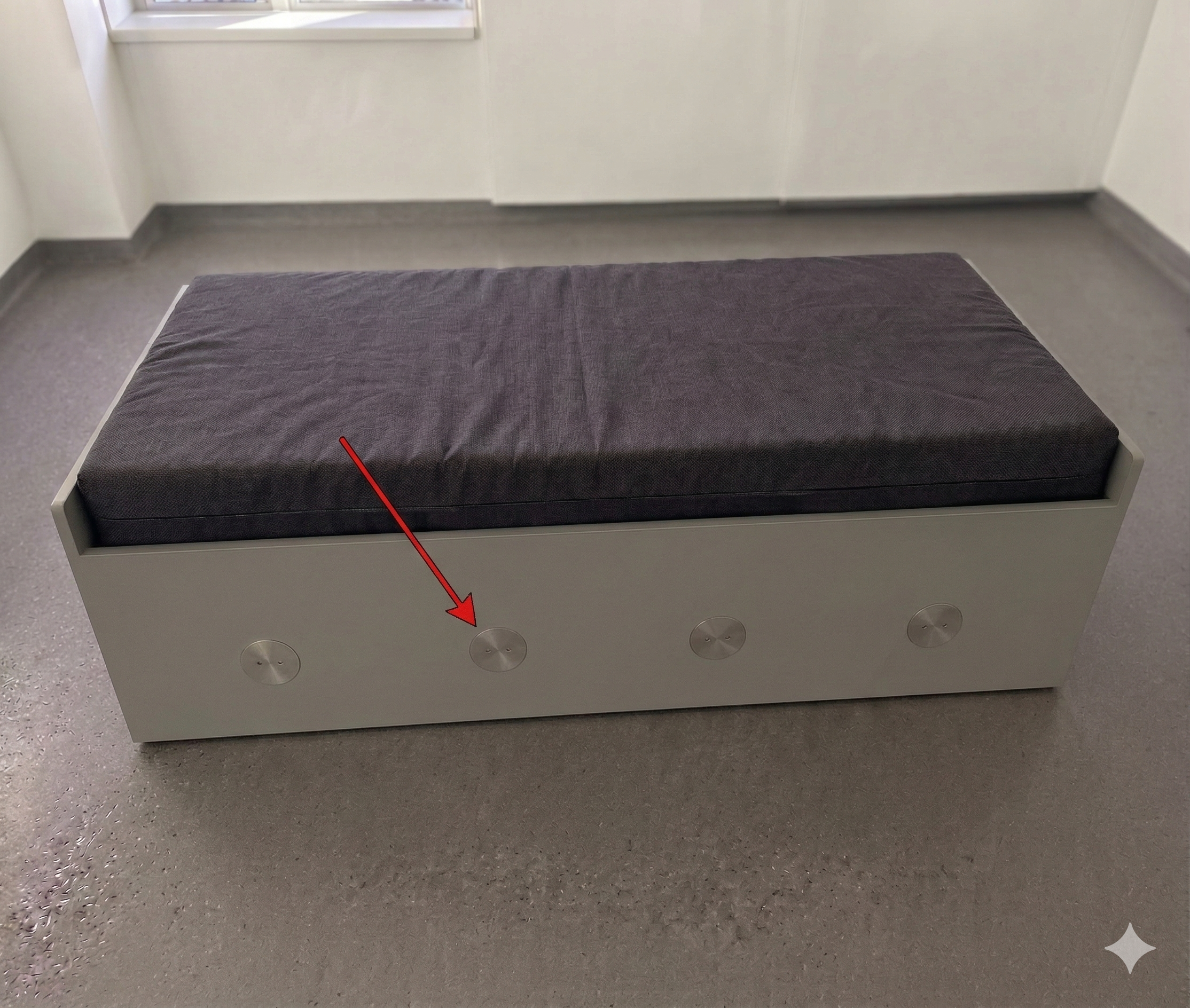
Furniture. Behavioral healthcare furniture includes beds, chairs, desks, wardrobes, and seating, all designed with enclosed bases, rounded edges, and no exposed attachment points. Bed hardware is a specific area of focus because restraint anchor points can create ligature risks when they protrude from the surface. The ERSO Restraint Anchor addresses this specific gap with a flush-mount, spring-loaded design that retracts and locks when not in clinical use, eliminating the external ligature point entirely.
Lighting and electrical. Ligature resistant light fixtures, switch plates, and electrical outlet covers are designed to sit flush with the ceiling or wall surface, preventing any material from being attached. These products are typically constructed with tamper resistant fasteners and sealed housings that patients cannot access or disassemble.
Window fittings. Behavioral safety products for windows include ligature resistant handles, restrictors, and locking mechanisms designed to prevent the window and its fittings from being used as an anchor point. These products also provide staff with controlled access to ventilation while maintaining security in the patient environment.
Ancillary products. The category extends to items that might seem minor but can still create ligature risks if not specified correctly. TV enclosures, notice boards, clocks, handrails, grab rails, ventilation grilles, and even coat storage solutions all require ligature resistant design in behavioral health settings. Facilities that aim to provide a single source approach to safety will need to account for every fixture and fitting in the patient environment.
Why Behavioral Safety Products Are Only Part of the Solution
It is important to recognise that behavioral safety products are only one part of a comprehensive safety strategy. The Joint Commission has stated clearly that it is not possible to remove all potential ligature risk points from an environment. This is why patient safety in behavioral healthcare rests on a combination of environmental design, staff training, patient risk assessment, and ongoing monitoring.
Even the best ligature resistant products can only reduce risk in the physical environment. Facilities must also ensure that staff are trained to identify new risks as they emerge, that patients are assessed for suicide risk on an ongoing basis, and that mitigation plans are in place for any areas where full ligature resistance has not yet been achieved.
The goal is not to create an environment that is clinically sterile or institutional in character. The best behavioral healthcare environments are designed to support healing and recovery while maintaining the safety standards that protect patients and staff. This is where the concept of aesthetically pleasing design becomes important. Modern behavioral safety products are designed to look residential and welcoming rather than punitive. Furniture with soft forms, fittings with clean lines, and fixtures that blend into the environment all contribute to spaces that feel therapeutic rather than restrictive.
Specifying Behavioral Safety Products for Your Facility
Specifying the right behavioral safety products for a project requires careful planning and collaboration between architects, engineers, facility managers, and clinical staff. The process typically begins with a comprehensive ligature risk assessment that identifies every potential ligature point in the environment, followed by a specification process that matches each identified risk with an appropriate product solution.
There are several factors to account for when specifying behavioral safety products:
Risk level of the space. Not every room in a facility requires the same level of ligature resistance. Locked inpatient psychiatric units need full ligature resistant environments across bedrooms, bathrooms, corridors, and common areas. Other settings, such as outpatient clinics or substance abuse services programmes, may need targeted solutions designed for specific high risk areas.
New construction vs. retrofit. Products designed for new construction can be integrated during the build process, which allows architects and engineers to plan for flush-mount installations, concealed fixings, and seamless surface finishes. Retrofit projects present different challenges because existing structures may need to be modified to accommodate behavioral safety products. Many solutions are now designed to fit both scenarios, including the ERSO Restraint Anchor, which supports seven installation methods across new build and retrofit environments.
Durability and material. Behavioral healthcare environments are demanding. Products must withstand daily use and, in some cases, deliberate abuse. Solid stainless steel construction, tamper resistant fasteners, and sealed housings are standard features of quality products in this category. Behavioral safety products that are not built for the specific demands of these settings will degrade quickly and may themselves become safety risks over time.
Infection control. Safety products in behavioral health facilities must also meet infection control requirements. Products with minimised surface gaps, sealed joints, and smooth profiles are easier to clean and less likely to harbour contamination. This is a particularly important consideration in acute settings where patients may attempt to tamper with or clog openings in fixtures.
Compliance and testing. Specifying behavioral safety products that have undergone independent third-party testing provides greater confidence that the product will perform as intended. Manufacturer self-certification alone is not sufficient for high risk environments. Look for products with documented test results and, where applicable, alignment with standards such as The Joint Commission's ligature resistance definition and CMS environmental safety requirements.
The Role of Restraint Anchors in Behavioral Safety
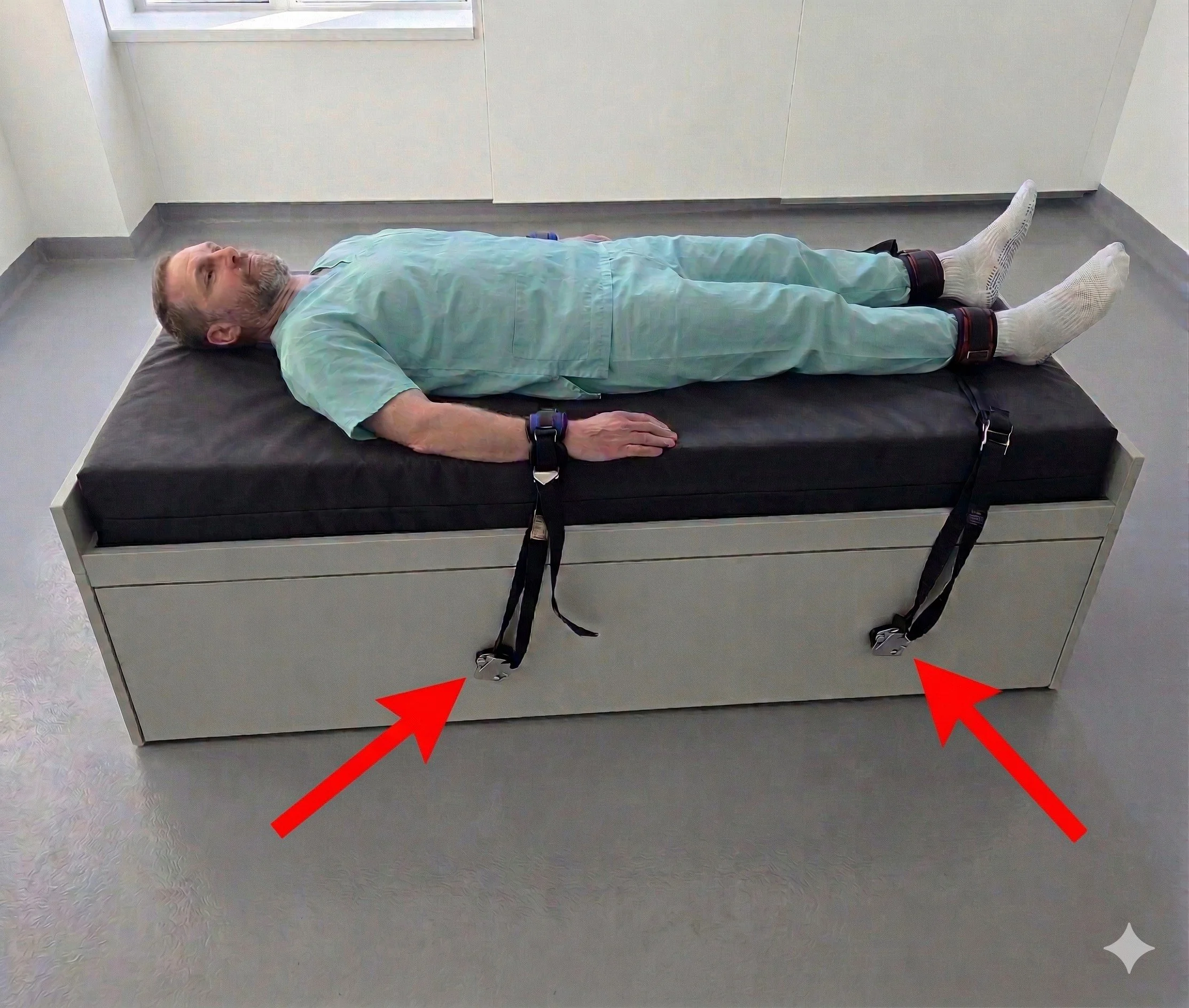
One area of behavioral safety that has historically received less attention is the ligature risk created by patient restraint hardware. Facilities have been cited by The Joint Commission for external rings on bed restraint systems that create ligature points, yet until recently there was no purpose-built product designed to solve this specific problem.
The ERSO Restraint Anchor was developed directly in response to this unmet need. It is the only US patented, flush-mount, spring-loaded ligature resistant restraint anchor on the market. When not in use, the anchor sits flush with the furniture surface, floor, or wall, creating no exposed fittings and no ligature point. When a restraint is clinically required, authorized staff deploy the anchor using a specialized key. After use, the anchor retracts and locks back flush, returning the environment to a fully ligature resistant state immediately.
This product fills a specific gap in the behavioral safety products landscape. While the industry has been continuously developing new solutions for doors, bathrooms, lighting, and furniture, the restraint anchor space had no equivalent innovation until ERSO engineered one. For facility managers and safety officers conducting ligature risk assessments, the restraint anchor point on psychiatric beds and furniture is a known and documented risk that now has a purpose-built solution.
Building Safer Environments Through Better Products
The behavioral safety products industry continues to advance safety across every category of fixture and fitting used in mental health facilities, correctional settings, and healthcare environments. The best outcomes come from facilities that approach safety as a comprehensive, ongoing project rather than a one-time purchasing decision.
This means conducting regular risk assessments, staying current with updates to Joint Commission and CMS regulations, specifying quality products that have been independently tested, and working with a team that understands the specific needs of each environment. It means choosing behavioral safety products that are designed not just to meet compliance requirements but to genuinely support the safety and wellbeing of patients and staff.
For architects, engineers, and facility teams planning a new project or retrofit, the order of priority should be clear: identify the risks, specify solutions designed to address each one, and create environments where safety and healing can coexist. For a full overview of anti ligature hardware, including how the ERSO Restraint Anchor fits into a wider safety specification, explore our homepage or contact our team to discuss your project.
The ERSO Restraint Anchor is the only US patented ligature resistant restraint anchor designed to eliminate the ligature point created by traditional bed restraint hardware. To find out how it fits into your facility's safety strategy, view the product page or contact our team.
Frequently Asked Questions
-
Behavioral safety products are fixtures, fittings, and hardware designed specifically for use in behavioral healthcare, psychiatric, and correctional environments. These products are engineered to reduce ligature risk, resist tampering, and maintain durability in demanding clinical settings. The category includes door fittings, bathroom fixtures, furniture, lighting, window hardware, and restraint systems.
-
Anti ligature is a commonly used phrase to describe safety focused fixtures in behavioral health settings, but it is technically a misnomer. No product can make an environment completely ligature free. The more accurate industry term is ligature resistant, which describes products designed without points where material can be looped or tied to create an attachment point for self harm.
-
Start with a comprehensive ligature risk assessment to identify every potential ligature point in the environment. Then work with architects, engineers, and clinical staff to match each identified risk with an appropriate ligature resistant product. Account for the risk level of each space, whether the project is new construction or retrofit, durability requirements, infection control needs, and whether products have been independently tested.
-
The ERSO Restraint Anchor is a US patented, flush-mount, spring-loaded ligature resistant restraint anchor. It is designed to eliminate the ligature point created by traditional bed restraint hardware. When not in use, the anchor sits flush with the surface. When clinically needed, staff deploy it with a specialised key. After use, it retracts and locks flush, returning the environment to a ligature resistant state.